



Die Weihnachtszeit hat die Angewohnheit, die Verkaufsgewohnheiten kleiner Unternehmen zu verändern.
Vielleicht betreiben Sie normalerweise einen Online-Shop, aber Weihnachtsverkäufe bedeuten Pop-up-Märkte, lokale Messen, Click-and-Collect, oder iAbholungen durch mehrere Personen. Oder vielleicht haben Sie bereits ein Ladengeschäft, aber die Käufer in der Weihnachtszeit stöbern zuerst online und kaufen dann dort, wo es am bequemsten ist.
Diese Mischung aus Online- und Präsenzverkäufen ist hervorragend für den Umsatz. Hier kann es aber auch schnell zu Problemen kommen, wenn Ihre Systeme nicht miteinander verbunden sind.
Unterschiedliche Lagernummern. Verpasste Bestellungen. Verwirrtes Personal. Am Ende des Tages stimmen die Tabellen nicht überein.
Deshalb ist es gerade zu dieser Jahreszeit besonders wichtig, dass ein POS, der alles miteinander verbindet ist wichtiger denn je.
Der Weihnachtsverkauf erfolgt standardmäßig über mehrere Kanäle.

Weihnachtskäufer denken nicht in “Kanälen”. Sie wollen einfach nur kaufen.
Sie könnten Ihre WooCommerce auf ihrem Smartphone speichern, am nächsten Tag Ihren Stand auf dem Weihnachtsmarkt besuchen, fragen, ob Sie etwas auf Lager haben, das an diesem Morgen online verkauft wurde, oder persönlich eine Rückerstattung oder einen Umtausch für einen Online-Kauf wünschen.
Aus Sicht des Kunden handelt es sich um ein einziges Unternehmen. Hinter den Kulissen jonglieren viele kleine Unternehmen jedoch mit zwei oder drei voneinander getrennten Systemen.
Diese Diskrepanz bleibt normalerweise unbemerkt, bis der Weihnachtsverkehr einsetzt – dann wird sie schnell offensichtlich.
Die versteckten Kosten des Betriebs separater Systeme
Der Betrieb eines Online-Shops und einer physischen Kasse mit separaten Tools kann an einem ruhigen Dienstag im März funktionieren. Im Dezember beginnt das System jedoch zu bröckeln.
1. Der Lagerbestand ist nicht mehr zuverlässig.
Wenn Online- und Ladenbestände nicht synchronisiert sind, verkaufen Sie am Ende Artikel, die Sie gar nicht vorrätig haben, halten Bestände “für alle Fälle” zurück und verbringen Ihre Abende damit, die Zahlen manuell abzugleichen. In der Weihnachtszeit, wenn sich die Bestände schnell verändern, wird dies zu einem täglichen Problem.
2. Die Mitarbeiter verlieren das Vertrauen.
Saisonale Mitarbeiter haben keine Zeit, komplexe Arbeitsabläufe zu erlernen. Wenn Systeme nicht aufeinander abgestimmt sind, hinterfragen sie Preise, Lagerbestände oder Kundendaten – was den Kassiervorgang verlangsamt und zu mehr Fehlern führt.
3. Die Verwaltungsarbeit explodiert
Anstatt eines übersichtlichen Verkaufsberichts exportieren Sie Dateien, gleichen Bestellungen ab und versuchen herauszufinden, was tatsächlich wo verkauft wurde. Das ist Zeit, die Sie im Dezember nicht haben.
Warum ein POS alles verändert
Ein einzelner POS, der in Ihrem WooCommerce-Speicher nativ ist, kehrt dies um.
Mit FooSales POS, Ihre persönlichen Verkäufe laufen direkt über WooCommerce. Das bedeutet einen Produktkatalog, einen Lagerbestand, eine Kundenliste und einen Satz Berichte.
Ob eine Bestellung online oder an Ihrem Ladentisch aufgegeben wird, sie wird im selben System gespeichert. Diese Konsistenz macht den Weihnachtsverkauf überschaubar.
Der Online- und der persönliche Verkauf fühlen sich gleich an – für Sie und Ihre Kunden.
Wenn alles über einen POS läuft, werden alltägliche Urlaubsszenarien einfacher.
Ein Kunde kauft online und holt die Ware persönlich ab.
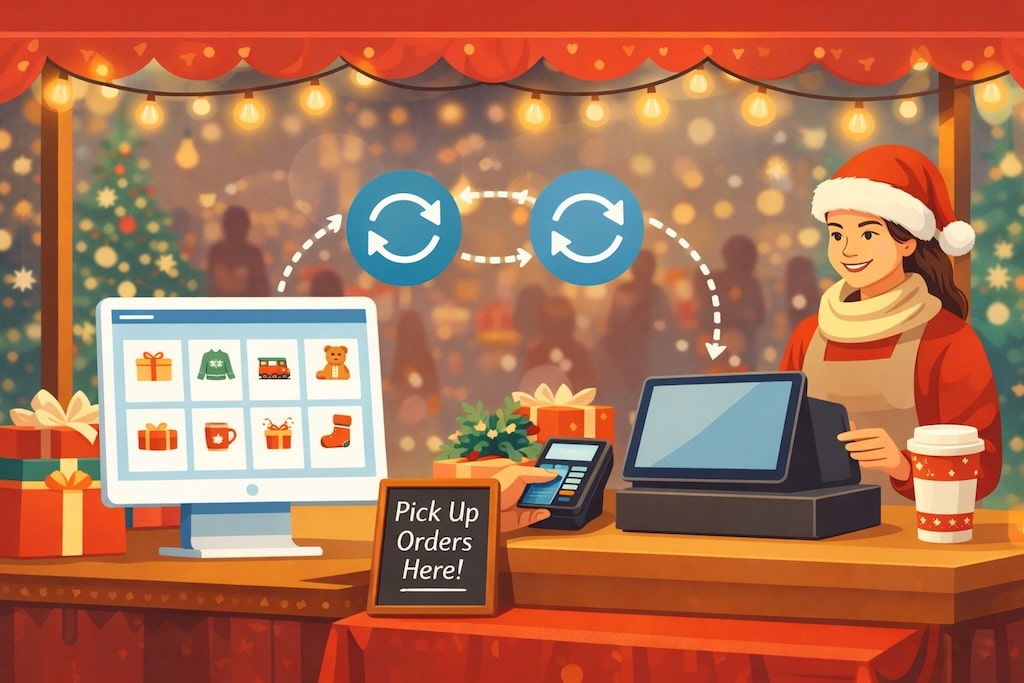
Die Bestellung ist bereits in WooCommerce vorhanden. Die Mitarbeiter können sie sofort sehen, als erledigt markieren und übergeben – eine separate Suche ist nicht erforderlich.
Ein beliebtes Produkt verkauft sich schnell auf einem Markt.
Da der Verkauf persönlich erfolgt, werden die Lagerbestände online automatisch aktualisiert. Keine Überverkäufe. Keine unangenehmen Folge-E-Mails.
Ein Kunde möchte ein Geschenk umtauschen.
Da alle Bestellungen in WooCommerce erfasst sind, können die Mitarbeiter den Kauf unabhängig davon, wo er getätigt wurde, nachschlagen und den Umtausch reibungslos abwickeln.
Weihnachtsverkauf-Pop-ups und Märkte erfordern Zuverlässigkeit
Der Verkauf von Festartikeln findet oft außerhalb Ihrer üblichen Umgebung statt: auf Märkten, Messen, temporären Ständen, in Gemeindesälen – manchmal mit unzuverlässigem WLAN und begrenztem Platzangebot.
Deshalb ist Offline-Verkauf so wichtig. FooSales ist für reale saisonale Konfigurationen ausgelegt, sodass Sie weiterhin Bestellungen entgegennehmen und diese synchronisieren können, sobald Sie wieder online sind.
Ein schnellerer Checkout ist während der Feiertage besonders wichtig.
Im Dezember bilden sich schnell Warteschlangen, insbesondere wenn Kunden in letzter Minute Geschenke kaufen, Kinder unruhig sind und das Wetter nicht mitspielt.
Ein fokussierter POS-Workflow hilft dabei, Produkte leicht auffindbar zu machen, manuelle Eingaben zu reduzieren, den Zahlungsfluss zu beschleunigen und kleine Fehler zu vermeiden, die zu Verzögerungen führen.
Kleine Verbesserungen an der Kasse sorgen insgesamt für ein spürbar besseres Kundenerlebnis.
Ein System erleichtert auch die Schulung von Saisonpersonal.
Die Fluktuation von Urlaubsmitarbeitern ist real. Möglicherweise stellen Sie Mitarbeiter nur für ein paar Wochen ein.
Wenn Online- und Ladenverkäufe über ein einziges System abgewickelt werden, gibt es weniger zu erklären, weniger Sonderfälle zu beachten und weniger Raum für Fehler. Die Mitarbeiter lernen eine Produktliste, einen Checkout-Ablauf und eine Art des Umgangs mit Kunden.
Berichte, die Ihnen tatsächlich bei der Entscheidungsfindung helfen
Nach einem langen Tag voller Weihnachtsverkäufe ist das Letzte, was Sie wollen, Spekulationen.
Da FooSales WooCommerce-Bestellungen verwendet, bleiben Ihre Berichte einheitlich. Sie können sehen, was sich über alle Kanäle hinweg am besten verkauft hat, die Marktverkäufe mit der Online-Performance vergleichen und tägliche Gesamtzahlen ohne manuelle Abstimmung erhalten.
Diese Übersichtlichkeit hilft Ihnen dabei, schneller nachzufüllen, Pakete anzupassen und smarter für das nächste Wochenend-Event zu planen.
Weihnachtsgeschäft ist die Zeit, in der Ineffizienzen offensichtlich werden.

Workarounds, die in ruhigeren Monaten “gut” funktionieren, versagen in der Hochsaison oft. Die gute Nachricht ist, dass sich jetzt vorgenommene Verbesserungen in der Regel sofort auszahlen – durch weniger Fehler, schnellere Kaufabwicklung und weniger Stress.
Warum WooCommerce-Händler von einem nativen POS profitieren
Es gibt viele POS-Tools auf dem Markt. Was ein WooCommerce-natives POS-Tool von anderen unterscheidet, ist, dass es nicht neben WooCommerce steht, sondern mit ihm zusammenarbeitet.
Dadurch lassen sich Synchronisierungsverzögerungen, doppelte Daten und Bestellungen in separaten Systemen vermeiden. Ihr WooCommerce-Shop bleibt die einzige zuverlässige Quelle – genau das, was Sie während des Weihnachtsgeschäfts benötigen.
Schlussfolgerung
Der Verkauf sowohl online als auch persönlich zu Weihnachten ist keine Komplikation – es ist eine Chance. Aber nur, wenn Ihre Systeme dies unterstützen.
Ein einzelnes POS, das direkt mit WooCommerce verbunden ist, sorgt für genaue Bestandsdaten, zuversichtliche Mitarbeiter und reibungslose Kassenabläufe, wenn die Nachfrage am höchsten ist.
Wenn Sie sich auf die Weihnachtszeit vorbereiten, in der neben Ihrem Online-Shop auch Pop-up-Stores, Märkte, lokale Abholstellen oder Verkäufe im Laden anstehen, ist ein vernetzter POS wichtiger denn je.
Starten Sie Ihren kostenlosen 7-Tage-Test
FAQ
F. Benötige ich ein separates Inventarsystem für den Weihnachtsverkauf?
A. Nein – wenn Ihr POS WooCommerce-nativ ist, bleibt der Lagerbestand an einem Ort und wird bei jedem Verkauf aktualisiert.
F. Was passiert, wenn mein Marktplatz über unzuverlässiges WLAN verfügt?
A. FooSales hat eine clevere Offline-Modus damit Bestellungen auch ohne Internet weiterlaufen können und Sie synchronisieren können, sobald Sie wieder online sind.
F. Gilt dies nur für produktbasierte Unternehmen?
A. Es ist sowohl für Waren als auch für Dienstleistungen nützlich, insbesondere wenn Sie persönlich und online verkaufen und einheitliche Aufzeichnungen wünschen.